Showing posts with label #New Normal. Show all posts

Friday, July 5, 2024

TOP FIVE SKILLS NEEDED FOR FINANCIAL ADVISORS IN THE POST-COVID MARKET CATEGORIZED INTO SOFT AND HARD SKILLS


SOFT SKILLS:

  • Adaptability: refers to the ability to adjust to new situations, changes, and challenges. It involves being flexible, open-minded, and resilient in the face of uncertainty. Insurance agents need adaptability to navigate evolving market conditions, changing customer preferences, and technological advancements.
  • Empathy and Emotional Intelligence: are essential for building strong relationships with clients. Empathy involves understanding and sharing the feelings of others, while emotional intelligence encompasses the ability to recognize and manage one's own emotions as well as those of others. Agents with high levels of empathy and emotional intelligence can connect with clients on a deeper level, understand their needs, and provide personalized support.

HARD SKILLS:

  • Digital Literacy: refers to the ability to use digital technologies and tools effectively. In the post-COVID market, insurance agents need digital literacy to navigate online platforms, utilize digital communication tools, and leverage data analytics for decision-making. It involves technical proficiency in using software, applications, and digital platforms relevant to the insurance industry.
  • Risk Management and Education involves assessing, identifying, and mitigating potential risks for clients. Insurance agents need expertise in risk management to understand various insurance products, assess clients' risk profiles, and recommend appropriate coverage solutions. It involves knowledge of insurance policies, regulations, and risk assessment methodologies.
  • Sales and Marketing Acumen: refers to the ability to effectively promote products or services, attract prospects, and close deals. In the post-COVID market, insurance agents need strong sales and marketing skills to differentiate themselves, generate leads, and drive business growth. It involves understanding market trends, developing persuasive communication skills, and utilizing various sales and marketing techniques.

By distinguishing between soft and hard skills, insurance agents can focus on developing a well-rounded skill set that encompasses both interpersonal abilities and technical expertise. This balanced approach will enable them to thrive in the dynamic and competitive post-COVID insurance market.

All the best my friends!!

#acgadvice

Saturday, March 9, 2024

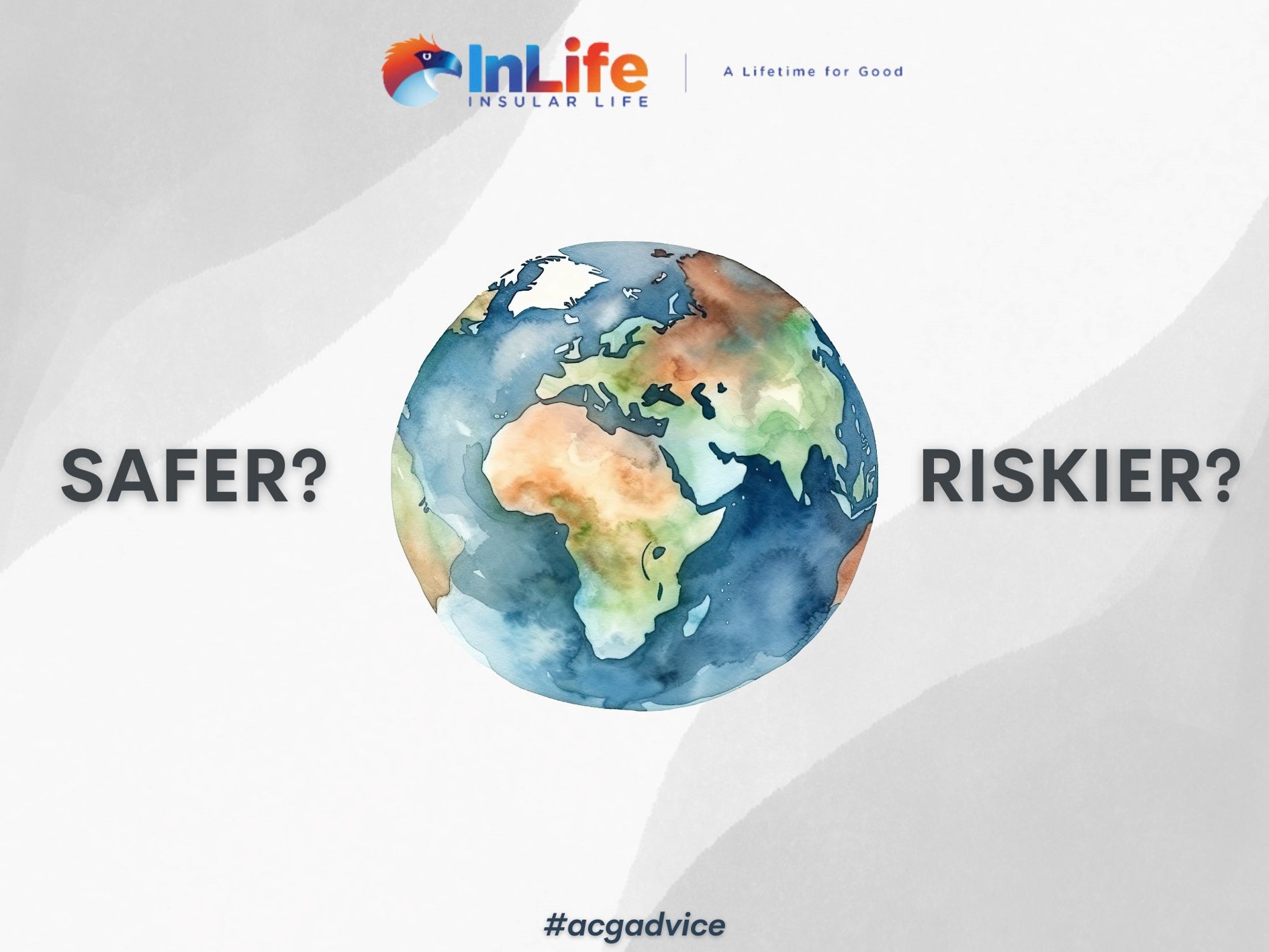
Is the world getting "safer" or "riskier"?


First, let us have a common context for "risk."

In general terms, risk can be defined as the probability or likelihood of an undesirable event or outcome occurring, along with the potential consequences or impact associated with that event. Risk involves uncertainty and the possibility of harm, loss, or negative consequences to individuals, organizations, or society.

Key components of risk include:

  • Probability: The likelihood or chance of a specific event or outcome occurring. This can range from highly probable to highly improbable.
  • Consequences: The potential impacts or outcomes that may result from the occurrence of the event. Consequences can vary in severity, ranging from minor inconveniences to significant harm or loss.
  • Exposure: The degree to which individuals, organizations, or assets are susceptible to the risk. Exposure depends on factors such as location, vulnerability, and the effectiveness of risk mitigation measures.
  • Uncertainty: The lack of complete knowledge or predictability regarding the future occurrence of events and their outcomes. Uncertainty is inherent in risk assessment and management and requires consideration of potential scenarios and their likelihoods.

Having said this, the trajectory of global safety is influenced by numerous factors such as geopolitical tensions, technological advancements, environmental changes, socio-economic conditions, and more. While some areas may see improvements in safety due to advancements in technology and international cooperation, other areas may experience increased risks due to conflicts, environmental disasters, or emerging threats.

For example, advancements in technology such as improved healthcare, enhanced surveillance systems, and better disaster preparedness can contribute to increased safety in certain contexts. However, technological developments also introduce new risks, such as cybersecurity threats, the potential misuse of advanced weapons systems, and ethical concerns related to artificial intelligence.

Similarly, while globalization and interconnectedness can foster cooperation and peace among nations, they also create vulnerabilities, such as the spread of pandemics, economic instability, and the risk of large-scale cyberattacks.

Environmental changes, including climate change and natural disasters, present significant challenges to global safety. Rising sea levels, extreme weather events, and resource scarcity can exacerbate conflicts and humanitarian crises, leading to increased risks for populations around the world.

Overall, it's difficult to make a definitive statement about whether the world is becoming safer or riskier as it depends on the specific context and the interplay of various factors. However, what is clear is that addressing global challenges requires proactive efforts in areas such as diplomacy, sustainable development, technology regulation, and environmental conservation to mitigate risks and promote safety for all.

all the best my friends!

#acgadvice

Tuesday, February 20, 2024

Are Financial Advisors Operating in the "Gig Economy"? We Need these 5 skillsets to thrive in this environment.


Financial advisors can operate within the gig economy, particularly if they work independently or on a freelance basis. In such cases, they may leverage technology platforms or their own networks to find clients and manage their workload flexibly. 

Here are the top five skills a financial advisor operating in the gig economy should have to thrive:

ENTREPRENEURIAL MINDSET:

Financial advisors in the gig economy need to have an entrepreneurial mindset to effectively market their services, attract clients, and manage their own business operations. This includes skills such as self-motivation, creativity, and adaptability to navigate the challenges of running a solo practice or freelance consultancy.

SALES AND MARKETING SKILLS:

In the gig economy, financial advisors must be adept at selling their services and building their brand. This involves effective marketing strategies to attract clients, strong communication skills to articulate the value proposition of their services, and the ability to build and nurture client relationships over time.

TECHNICAL COMPETENCE:

Financial advisors operating in the gig economy should possess strong technical skills to leverage digital tools and platforms effectively. This includes proficiency in financial software for portfolio management, financial modeling, and data analysis, as well as familiarity with digital marketing tools and social media platforms to promote their services and engage with clients.

CLIENT RELATIONSHIP MANAGEMENT:

Building and maintaining strong client relationships is critical for success in the gig economy. Financial advisors should excel in client communication, listening, and empathy to understand their clients' needs and provide tailored solutions. They should also demonstrate integrity, trustworthiness, and professionalism to inspire confidence and loyalty in their client base.

CONTINUOUS LEARNING AND ADAPTABILITY:

The gig economy is dynamic and constantly evolving, requiring financial advisors to stay updated on industry trends, regulatory changes, and emerging technologies. Advisors should prioritize continuous learning and professional development to enhance their knowledge and skills, adapt to changing market conditions, and deliver value-added services to their clients.

By honing their entrepreneurial mindset, sales and marketing skills, technical competence, client relationship management abilities, and commitment to continuous learning, financial advisors operating in the gig economy can thrive in a competitive and rapidly changing business environment.

All the best my friends!! 

#acgadvice
Thursday, September 1, 2022

ZOOM FATIGUE !!! (from a financial advisor's perspective)

picture credit to the owner

Oh no!!! Not another zoom meeting!!!

Agency managers have never had it so good, when I was on the other side of the fence (distribution development on the corporate side), agency meetings are always preceded by:

  • the conceptualization of the theme - it can be a market update, product launches, announcement of sales campaigns or to share insights that we hope will help our advisors provide more value to their clients
  • this is then followed by budget requests to cover the costs of the venue, some light snacks and maybe some giveaways
  • and if the budget permits, we would be inviting a guest speaker to increase attendance especially if we can afford a "credible" and "known" resource person

Nowadays, its mostly just coming up with a theme for the meeting, maybe invite a speaker, announcing the meeting and setting it up over zoom

I am all for efficiency and reach of online meetings, but after attending so many since the lockdown two years ago, I literally have to be more discerning as the time I would spend listening to the drawl of a typical zoom meeting is competing with the time I could have spent watching YouTube Videos of MDRT sharing (https://www.youtube.com/c/MillionDollarRoundTable) or watch Boss Rex reinforce old learnings and learn new ones (https://www.youtube.com/c/RampverFinancials)

CREDIBILITY - I think this is the key, as there are already costs savings from not holding these on a physical venue (at least most of it), maybe the organizers that use this savings in getting more credible speakers as they can be more expensive compared to run of the mill speakers they normally feature

I find it a waste of time (pardon my directness) to listen to speakers who have not sold a thing in their life trying to teach me about selling, a non-MDRT speaker telling me how to qualify or someone without any meaningful field experience coaching me on how to be a better financial advisor, its much like a blind person leading the blind

as they say - "pay peanuts, you get monkeys" ha ha ha 

#acgadvice