Tuesday, December 20, 2022

89. Governments are Worried about Inflation, should we? 2023 Investment Approach?

Last week, the US Federal Reserve Board announces another rate hike to combat rising inflation currently doing at 7.1% (November 2022), this is not surprising as this is way beyond their inflation target

What Is Inflation Targeting?

Inflation targeting is a central banking policy that revolves around adjusting monetary policy to achieve a specified annual rate of inflation. This is known as the target rate, which is normally set at around 2% to 3%.

The principle of inflation targeting is based on the belief that long-term economic growth is best achieved by maintaining price stability, and price stability is achieved by controlling inflation. (https://en.wikipedia.org/wiki/Federal_funds_rate)

As the biggest economy in the world, this policy decision by the US Fed influences the rest of the world including the Philippines, expect that the BSP would be announcing hawkish monetary policies along this line

How does this affect us?

Higher interest is a double edge sword - this is generally good for savers as we could expect an uptick in the interest we are getting for our savings, but a bane for borrowers as this would translate to higher costs, this is especially disadvantageous to corporate borrowers as the extra cost in borrowing may eat into their profit margins

This is why the stock market normally reacts negatively to interest rate hikes or even just the prospects of it

2023 Investment Approach:

1. Ensure that you have sufficient liquidity (at least 3 to 6 months of expenses)

2. Funds placed in any equity linked vehicles may not provide any capital gains in the near term

3. Just like any other economic indicator, interest rate policies move in cycles, so if you have extra funds that you can set aside for a year or two, picking up some bargains may make sense. As there would be quite a lot of volatility going forward, take a "cost averaging approach", the best would be taking position on a monthly basis (whether VUL, MF or UIT)

Disclaimer: This may not be suitable for you considering your specific financial circumstances, best to consult with a financial advisor

all the best my friends!

#acgadvice

Thursday, December 15, 2022

88. Why the "Critical Illness Rider" is Critical to a Successful Financial Plan


Most VUL cases I see being bought by policyholders are either intended to provide money for  (1) education expenses of a child (2) retirement funding (3) saving up for a life goal

These are all good and are positioned to benefit from the long term upward bias of the investment component, usually invested in an equity fund or a variation thereof, a lot of academic studies shows that over the long term, an equity fund is the optimum vehicle for capital appreciation, so all a policyholder needs to do is the maintain the policy and wait for the maturity period? right?

One aspect that some advisors may have overlooked is the "long term nature" of the plan, we are looking at 10, 15 or even 20 years into the future, while we cannot guarantee investment returns, what is "guaranteed" is that the policyholder will get old, and as they get older, the chances of them getting sick becomes higher

Imagine 15 years into a 20-year retirement funding plan, the policyholder suddenly contracted a critical illness that requires substantial expenses, it is possible that surrendering the policy for fund value may happen to help defray medical expenses, will there be anything left to fund his retirement?

Attaching a critical illness rider to the plan may make sense in this case, if the same circumstances happen to the policyholder on the 15th year, he can claim on the protection benefits of the CI rider keeping his retirement fund value intact

All the best my friends!

#acgadvice

Wednesday, December 14, 2022

87. "Ahente lang ako.."


 "Ahente lang ako.." 

is one of the saddest declaration I can hear from a financial advisor in describing what we do as financial advisors, this is both demeaning and de-moralizing, it's as if we are only purveyors of insurance products to sell, earn commission and we are done

There is no question that to be successful in this line of work, the ability to sell is very crucial, but we may have to define the parameters as to where the sales function begins and the financial advisory function starts

Life Insurance in a lot of ways is a very flexible product, I say this because most life insurance products now (VULs) are very straightforward and can actually be custom designed with specific financial needs in mind 

A well thought of VUL plan can be tweaked to address both the "protection" and "wealth accumulation" goals in a single plan through the attachment or dis-attachment of "riders"  

For example, for a breadwinner just starting out can put more weight on maximum protection while building up the "fund value" by adding a term insurance rider, this can be decreased over time as the fund value increases thereby increasing the funds allotted for wealth accumulation, this plan after a time can be used to fund longer term goals such as retirement

The "sales function" in this case is helping the client realize the importance of starting early, as the resulting fund value is a function of market movement over time, we always hear experts telling us that over the long term, capital markets investments almost always deliver decent returns

But capital market returns are earned without a lot of volatility in between, this is where the financial advisory comes in, we have to continuously "update" the client and ensure that this volatility will not lead to a premature cancellation of the plan

So, if we are asked what we do as financial advisors, we can say that we help people achieve financial security by helping them design a plan appropriate to their current financial circumstances, then provide a "helping hand" to guide them along the way

All the best my friends.

#acgadvice


Wednesday, December 7, 2022

86. Create an instant "ESTATE" using Life Insurance


Life Insurance is often viewed as an unnecessary "expense" in one's family budget, I used the word "expense" to highlight the perspective by which some of us we decide on whether to get one or not

Classifying it as an "expense decision" placed it in the same category as decisions pertaining to whether to take a vacation or not, the type of car we purchase, or even the brand of shampoo we pick up at the grocery aisle. 

"We purchase something, what do we immediately get in return?", in our mind, it has become a commodity purchase decision

I think this particular mindset with regards to Life Insurance is brought about in part by how we advisors offer it in the first place,  it is not surprising to hear advisors telling prospects that his product is better because - its cheaper.. it has more benefits..etc etc.., we have framed our proposal as a commodity purchase, it is also not surprising that most of these offers get rejected

What is the price of "peace of mind" to a family breadwinner? 

My suggestion is look at the money you would decide to allot to a life insurance policy as your regular savings, something you set aside for a rainy day, money intended for some important future life goal, money intended to give you peace of mind in case of some catastrophic events

Consider a typical family breadwinner, whose main aim to provide the best to his family from the fruits of his labor, in an ideal world this objective will go on unhindered for as long as the family breadwinner can provide..

An "estate" is something of value that is pass on to the family in case the breadwinner meet an untimely demise, its main purpose is to provide a base by which the family can use to absorb the financial difficulties this event may have created, it gives them a buffer to adjust to the new reality of going forward with the least disruptions

Contrary to popular belief, purchasing a Life Insurance Policy for this purpose in not that expensive, I have seen proposals that would enable a breadwinner to set up a ONE MILLION PESO estate for the price of several gourmet coffees that we indulged in from time to time

What is the price of "peace of mind"?

all the best my friends!
#acgadvice

Monday, November 28, 2022

85. Create "LIQUIDITY" using Life Insurance


One classic application of Life Insurance is the creation of "CASH" in lieu of property inheritance, I first learned of this so many years ago from Rex Mendoza during his talk in one of our agency rounds for Philam Asset Management

Rex has a wealthy client who has vast property holdings in Cavite, while she lives in a big house with all of the physical trappings of a rich landed family, she unfortunately has very little "cash" to support her lifestyle and maybe help out family members in need of financial assistance

She shared that she intended to bequeath her land holdings among her 2 grown children who are now quite successful in their chosen field, one is a physician practicing in one of the eminent hospital in Canada while the younger one is a fund manager with a global firm based in Singapore

While the plan may makes sense in a typical estate planning approach, Rex raised some issues that the client may have overlook

  • First is estate tax (it was still 20% then) - while the children may be able to afford it considering their status, it is still a big chunk of money
  • Second is - are the children be willing to come back to live in their ancestral home?
  • Third is that while the client is rich in assets, she is poor in terms of cash

Rex suggested the following solution:

As the properties then are valued at around 10M pesos, he suggested to sell it and move to a smaller house as the client is living by herself, she can then get a 10M Life Insurance Policy with her 2 children as beneficiary (5M each)

The values created are :

  • No need to worry about estate taxes as the property is sold already
  • the children still gets the same amount of inheritance
  • the client can use the remainder of the sale proceeds to live out her life in a more comfortable manner

Hope this help in your year-end push my friends, all the best!

#acgadvice

Wednesday, November 16, 2022

84. It's the "IDEA" that sells the product


I am re-learning a lot in my comeback as a financial advisor, concepts that I have espoused in the past has been constantly challenged in the light of recent developments in the financial markets

I am thankful for my many rejections as it forced me to re-evaluate what a prospective policy holder will accept as something that would create value for them

I may have the best product available in the market, but if I fail to demonstrate how it can help mitigate a risk or enhance value in my prospect's financial journey, the product will not be bought!

I's like to share 2 ideas that worked for me 

First, considering current market volatility, suggest to the client to stretch the frequency of payment option to as often as they can, I find the monthly premium payment the best as it maximizes the benefit of "cost averaging", the value to the client is getting the best average entry price that could mean as much as 70% more future value (please see my previous post - 78. (VUL) Sell the protection, not the returns)

second, focus on the "guaranteed" aspects of a VUL proposal, it could be the face amount, the attached riders that addresses critical illness or waivers of premiums, that for as long as the premiums are paid on time, these benefits are guaranteed, the value to the client is the "certainty" aspect of a VUL

all the best my friends!

Sunday, September 25, 2022

81. Wealth Enhancement Strategies for the HNI Market

The High Net Worth (HNI) market is the holy grail of financial advisory, this is the key to TOT qualification

To grow as financial advisors, it is very important that we develop and maintain a HNI client base because this would give us the opportunity to acquire competitive advantage by learning to develop solutions for complex financial needs

HNIs are extremely successful individuals who are in possession of large amount of wealth whether inherited, from the practice of their profession or by dominating their business niche 

The usual advisor's pitch of helping them prepare for retirement or education funding for their children usually do not interest them as they can already afford it many times over

Approaches on investment management may get their attention only because they are looking for new outlets for further diversification of their portfolio

What would be a good approach?

A recent study shows that between the trade-off of "price" versus "value", HNI would most likely consider a proposal with clear and concise value proposition, something that would further enhance the benefits they derived from their already substantial wealth base

The same study shows that three years into the pandemic, 67% of Asian HNIs are now more concerned with the costs of medical treatments

A good approach may be a plan that would enhance the "financial protection" afforded by their health fund

One idea I would like to share is the case I am working on now

Client A decided to set up a personal health fund, he would allocate 10M as initial seeding and add a million pesos a year over the next ten years to cover increases in the cost of treatments,  he eventually would like to build it up to 20M

My proposal is a 10M Life Insurance with a 10M CI rider to cover critical illness, annual premium is about 1.25M/year for 10 years

The value proposition is this - while the client can well afford to self-insure, the plan would allow him to pass on the risk of the more expensive critical illness expenses because a CI happening at the onset of this build up plan may deplete his health fund and affect his ability to continue building it up

The value proposition is this plan would immediately "almost" double the benefits of his health fund

Including an investment component to the plan will allow the client to recover the cost of the CI rider making it seem to be cost free during the protection period

Ideas such as this is what would differentiate an ordinary financial advisor pushing for the old and tired approach of retirement/education planning to an advisor capable of coming up with wealth enhancement strategies 

This is a one-hour program that would present several more wealth enhancement ideas that may help in your last quarter run for qualifications, email alijeffty@gmail.com for arrangements for group presentations

all the best my friends!
#acgadvice

Thursday, September 15, 2022

80. What is best investment advice we can give today?


I was talking to a fellow financial advisor the other day

She is scheduled to meet one of her long time and valued client for portfolio review and to provide possible recommendations for re-allocation with an objective for faster recovery as the portfolio is still down by 20% even though it was placed more than 5 years ago

This is one of the most challenging situation for any financial advisor - what advice can we give a client who has entrusted to us their life savings expecting that the product solution we provided in the past would really make them better off, what if after years of patiently waiting, they are still not seeing any gains and worse, is in a negative position

Situations like these challenges the confidence of the financial advisor in the capital markets where the funds are invested, we are constantly reminded by investment experts and gurus  "that over the long term, equities almost always goes up...", how long do we need to wait for this to really happen, obviously five years is not enough, 10 years? 15?

I always have a healthy respect for the "uncertainty and volatility" of the market, I have seen fund values rise and fall since the 90s, the Asian Financial Crisis, Dot com, 9/11, mortgage crisis of 2017 and the most recent covid induced crisis

I always take the advice of the so called "experts" with a grain of salt, because ultimately as a financial advisor, I am the one facing clients, I am the one responsible for providing advice that may or may not  help clients achieve their financial objectives, at the end of the day, it is on me!

So what is the best advice we can give today?

Critical Assumptions:

  1. equities have a long-term upward bias
  2. equities are volatile by nature, hence unpredictable over the short-term
  3. volatility strategies should be in place from the onset (cost averaging for multiple pay and portfolio allocation for single pay)

Some factors to consider:

Time Horizon of the client - 5 to 10 years (fixed income portfolio), 11 to 15 years ( 60% equities, 40% fixed), 15 years or more ( 80% equities, 20% fixed), of course these are just rule of thumbs, actual allocation should include the client's risk profile

Where to invest? Local or Global - Global funds are quite popular these days as various companies have launched various versions of their own in the past few years, it promises access to developed markets, foreign diversification and global management expertise

First a disclaimer : This is just my personal opinion and should be in no way to be constituted as a financial advice, I would suggest you continue on your studies and research, because ultimately, you are responsible for your client's financial well being

I prefer local funds for the following reasons

Global funds are typically structured as "funds on funds" offered by local investment houses and it naturally translates to various levels of "management fees", first, the fee charged by the fund originator, second the fee charged by the fund aggregator, third the fee charged by the local investment house and fourth the fee charged by the company offering the product to the end user (our clients)

second is that these funds are originally denominated in USD, and as such, if the product is bought in pesos, clients can be exposed to FX risk, it is as if we are buying USD at the current level, if the peso starts appreciating, it will affect its conversion from USD to pesos

third, it may be over-diversified - while it is true that diversification minimizes risk, also remember that it also puts a cap on the upside, portfolio theory places the ideal diversification to just 18 to 22 assets, anything higher may lead to over-diversification


final word is that sophisticated is complicated (and expensive), fees will eat into returns and be aware of conversion risk

all the best my friends!

#acgadvice

Thursday, September 1, 2022

79. ZOOM FATIGUE !!! (from a financial advisor's perspective)

picture credit to the owner

Oh no!!! Not another zoom meeting!!!

Agency managers have never had it so good, when I was on the other side of the fence (distribution development on the corporate side), agency meetings are always preceded by:

  • the conceptualization of the theme - it can be a market update, product launches, announcement of sales campaigns or to share insights that we hope will help our advisors provide more value to their clients
  • this is then followed by budget requests to cover the costs of the venue, some light snacks and maybe some giveaways
  • and if the budget permits, we would be inviting a guest speaker to increase attendance especially if we can afford a "credible" and "known" resource person

Nowadays, its mostly just coming up with a theme for the meeting, maybe invite a speaker, announcing the meeting and setting it up over zoom

I am all for efficiency and reach of online meetings, but after attending so many since the lockdown two years ago, I literally have to be more discerning as the time I would spend listening to the drawl of a typical zoom meeting is competing with the time I could have spent watching YouTube Videos of MDRT sharing (https://www.youtube.com/c/MillionDollarRoundTable) or watch Boss Rex reinforce old learnings and learn new ones (https://www.youtube.com/c/RampverFinancials)

CREDIBILITY - I think this is the key, as there are already costs savings from not holding these on a physical venue (at least most of it), maybe the organizers that use this savings in getting more credible speakers as they can be more expensive compared to run of the mill speakers they normally feature

I find it a waste of time (pardon my directness) to listen to speakers who have not sold a thing in their life trying to teach me about selling, a non-MDRT speaker telling me how to qualify or someone without any meaningful field experience coaching me on how to be a better financial advisor, its much like a blind person leading the blind

as they say - "pay peanuts, you get monkeys" ha ha ha 

Thursday, August 25, 2022

78. (VUL) Sell the protection, not the returns


If a prospect can well afford to invests millions of pesos in a VUL, it only means that he is a successful "earner" whether from the practice of his profession or running his own business, this is typically the normal definition of high net-worth clients

The high net-worth market is the most rewarding segment of our practice as it gives us the opportunity to conceptualize, design and recommend customized solutions to match an HNI's unique financial goals, not to mention the more meaningful rewards we get for a successful conclusion

Unique in the sense that our usual sales proposition of investing for education or retirement may not be of interest to them, so the challenge would be to understand how our product's various benefits can be structured in a way that would add value to their portfolio

Our typical approach is to position our products in terms of the benefits of a managed investment portfolio, how it is diversified, managed by professionals, access to foreign markets etc etc etc

In my early experience in my comeback as a financial advisor (joined Inlife June 2022), I sadly discovered that selling the VUL on the basis of possible superior returns coming from the benefits of a managed portfolio DO NOT WORK!

The simplest explanation for this is maybe because of the attractiveness of the HNI market, they have already been called upon by other advisors and even their bank (bancassurance), they have already heard all of these before and what we are telling them is just the same

I am now working on several cases using approaches based on the unique needs of the HNI market, I will blog on them as soon as any of these result to a sale

Stay tune..

#acgadvice

Sunday, June 26, 2022

77. How optimistic would you be if Warren Buffet manages your retirement portfolio?

As of May 12 of this year, the US market as measured by the Standard & Poors Index is down by more than 18%! Retirees invested in the US market will see their retirement fund shrunk by almost the same amount! This is a serious number! Provisions intended for 10 years will now be sufficient for only 8.2 years.

Berkshire Hathaway on the other hand is UP by 3.8%! a similar 10 year retirement fund would have grown by about 5 months!

Over the last 10 years, Berkshire Hathaway grew by 336.4% over the S&P 500 195.6%!

How great would it be if we have the great Warren Buffet as our fund manager!

Some may have access and resources to invest in Berkshire, but for those without, is there any way to generate returns in a volatile market?

Success in investments is all about "choosing" the right mix of assets to be included in your retirement portfolio, as each asset class will have its own specific risk to reward characteristics, to optimize returns and to minimize risk as much as possible, the key is to decide how much percentage of each asset class should you allocate your funds to

Two guidelines?

Time horizon - the years to your retirement

the earlier you start will give you the advantage of having the ability to be more aggressive, as risk is almost always relative to return, placing a larger portion of your funds in equities may translate to two benefits, first is that the amount of money needed to achieve a target retirement fund level may be smaller (hence cheaper), as the higher projected returns may translate to a higher growth rate

the second benefit is that allocating the same amount of money may grow to a much sizeable retirement fund

Accept "volatility" as a fact in generating returns

The market will not be moving up or down in a straight line but in a series of oscillations, a proper asset allocation strategy from the onset of the investment will provide the flexibility to take advantage of these swings

a 60/40 (equity/bond) portfolio for example will have a different asset percentage distribution after a period of time, in a case where the stock market goes up, it may become 65/35 because of stock market appreciation, the idea here is to bring it back to 60/40 by moving the excess funds from equities to bonds, this is the so called re-balancing

regular re-balancing serves two purpose: first it that it sets a limit to the amount of risk to the portfolio, a 60% allocation to equities limits market risk exposure to 60% of your retirement fund, second is that it provides an automatic mechanism for profit taking, this can serve as buffer when the need to average down arises as the market moves down

we may not have the privilege of having Mr. Buffet manage our retirement fund, a structured disciplined approach (asset allocation + regular re-balancing) may be the second best approach to achieve our retirement goals

all the best my friends!

76. When the U.S. sneezes, the world catches a cold

My financial education was brought up in an environment when the US markets rule the world.

In the mid-90s when I was with a fund management company, we make it a point to check the results of US trading every morning before we go out and meet our distributors, this provides a starting point for market updates we give throughout the day, and if the market is extra volatile (up or down at least 2%), we would shift through the news to try to find clues for its next move, these information somehow gives our sales partners a certain sense of comfort in believing that the market is somewhat rational and any moves can be explained away in a logical manner.

The financial services industry is sometimes categorized into the “Sell side” and the “Buy side”, Sell side are companies involved in creating products and services that aims to generate returns on the market, the buy side companies are the pension funds and investors in general who buys these products to include in their investment portfolio

Financial advisors in general, as they are offering products and services can be grouped with the Sell side, while the insurance companies they represent are generally grouped with the Buy side as they continuously source out financial products to be used as building blocks to the Life Insurance products they create

This insight is useful in understanding how the markets may influence the context in which information is gathered and disseminated

The Sell side obviously would focus on the more positive aspects of the markets to make their product offerings more saleable while the Buy side may be more critical in their study of the market as a faulty view may affect the viability of the products they create and place the reputation of the company at risk

The Sell side’s context in the market updates they provide can be summed up as “what can go right given the circumstances” while the Buy side focuses on “what can go wrong”

As we create our own market narrative it would be helpful to seek inputs from both sides, combining insights from “what can go right” and “what can go wrong”

My own experience tells me that divining the next market move is quite difficult, no matter what the forecasts is (either up or down), the odds of being correct six months from now would be 50/50 at best

This builds the case of having a proper asset allocation strategy before committing any funds to the market, spread out your investible funds in assets that are generally uncorrelated, this would provide the flexibility to adjust your market exposure which may help in generating consistent positive returns over the long term.

All the best my friends

#acgadvice


Wednesday, April 20, 2022

75. Why frequent "market updates" may scare your client more

I used to conduct quite a number of "market updates" for the agency force, I have minimized doing so for two reasons

First is that it seems to create an assumed need among advisors that the ability to predict short term market volatility is required for a successful financial advisory practice. While being able to explain to clients current market situation and developments adds value to financial advice, it can also lead to the second reason

clients may start expecting advisors to provide regular "accurate" market forecast, inability to do so consistently may affect the advisor's credibility and create some stress in the relationship

For example the client placed some money in a single pay VUL intended for retirement 20 years from now, as VUL values fluctuate and may cause the client to worry, the advisor came up with a very compelling "market update" and is able to convince the client that the current market downturn is temporary and it will recover soon, the advisor turns out to be correct

imagine doing this for every "market correction", we may be right in our initial forecasts, but can we sustain this by providing correct forecasts all the time in the next twenty years?

The key to sustainable long term client relationship is to take the emphasis out on explaining why the market is volatile in the short term, market updates should focus on reinforcing the long term upward bias of the market, and it would help a lot if the single pay VUL is properly allocated from the very beginning 

a simple rule of thumb using time horizon 


so depending on how the market moves (whether up or down now will not matter), review and re-balance the portfolio regularly

all the best my friends!

Monday, March 21, 2022

74. What is your objective every time you make a presentation?


As a newly coded advisor in August of 2019, I went to market with fervor and enthusiasm doing "great" presentations to each and every prospect that gave me an opportunity

To me, a "great" presentation is one that is full of financial insights, economic indicators and a hundred and one way on how to create a market responsive financial portfolio - one that is designed to take advantage of what I believe is the evolving market trend

I see every presentation as an opportunity to demonstrate to prospects how knowledgeable I am in the field of financial advisory and expects them to give me their business on this basis

How wrong am I !!!, in my first month as a newly minted advisor, I got a big fat "ZERO" production result

Prospects don't care how much you know! they would only start listening if we, as financial advisors start "caring" about them! their current financial situation, things that matter to them, their financial goals and aspirations

a financial presentation is not an opportunity to showcase what we know, but an opportunity to get to know the prospect better and finding the most appropriate financial solutions given this understanding

a great presentation should be "client centric"!

I made the big switch in September, instead on focusing on various ways to plan for retirement, I spend most of the time talking to prospects, asking questions to understand their expectations of what constitute a comfortable retirement

instead of talking about how great my medical insurance is, I asked about their fears and concerns with regards to the rising cost of critical illness treatments and how ready are they to address this

in just a month I was able to produce the necessary quarterly business requirements to qualify for a gold medal, graduating to platinum in the succeeding quarter and MDRT by early December 

This is the first lesson I learned being in the field as a financial advisor

its not about what we know, its all about what we know about the prospect! this is how we earn the privilege to give financial advice 

all the best my friends!

Wednesday, March 16, 2022

73. This "savings" mindset may be what is keeping you poor


You decided to save 10,000, and just like before, you deposited the money to your savings account

the question now is, did you "save" or "invest"?

the decision to save money and where you decided to keep it are two different issues

if you retained "possession", its your savings

as soon as you transfer "possession", you are effectively entrusting that money to another party, in effect, you are already investing, so the act of depositing it to your savings account means you are no longer in possession so there now exist a possibility, albeit minimal of the chance of not being able to get in back

the main benefit proposition of a savings account - "liquidity" (the ability to withdraw it anytime, 24/7) creates an illusion of possession

understanding this difference would be vital in wealth building  

first is that once you realized that every time you make a deposit - you are already in fact investing, this would changed your expectations in terms of the returns that you are getting  

sure we need the liquidity, but keeping most of our savings in a savings account is counter productive, as the returns we are getting is not enough to offset the eroding effects of inflation

the "advice" is just to keep an amount equal to three to six months of your average monthly expenses and invests the excess in other forms of investments - investments that have the potential of beating inflation

all the best my friends!

#acgadvice

Tuesday, March 8, 2022

72. Celebrate the small wins! it will bring you closer to the "BIG" one!


As financial advisors, what are the "small wins" that will motivate us to go further?

it could be a meaningful conversation with a prospect, sharing financial insights that can help in widening his understanding of the pros and cons of acting/not acting in starting to prepare for his important life goals

  • will accomplishing more of these "encounters" bring you closer to your goals?
  • does this give you a sense of satisfaction of a job well done?
  • celebrate this as a small step that leads to a bigger one!

then it could be that prospect that decides to be a client by getting his first insurance policy even if he is starting with the "minimum" premium

  • your hard work is paying off
  • you have just helped one family take their first step to financial security
  • celebrate this small step that gives meaning to our financial advisory practice!

the client turned to a satisfied client and started referring you to his friends because he found so much value in your advice, he is especially very appreciative that you took time to explain to him that the current market volatility brought about by the Russian conflict is just a small blip and the market usually resume its upward bias in time

the three most important events in our practice that we should celebrate are:

  • A meaningful financial conversation with a prospect
  • the prospect that turns into a client
  • the satisfied client who refers you to his friends and associates
celebrate these three and it will keep you motivated to achieve your much bigger goal of finally qualifying to the MDRT!

All the best my friends!

Tuesday, February 22, 2022

71. To thrive, always be better than your best!


Usain St. Leo Bolt, OJ, CD, OLY is a retired Jamaican sprinter, widely considered to be the greatest sprinter of all time. He is the world record holder in the 100 metres, 200 metres, and 4 × 100 metres relay.

http://usainbolt.com/

 Usain Bolt has shattered the world record for the 100 meter dash in May of 2008, considered to be the fastest man alive at that time, he could have "retired" and bask in the glory of this astounding achievement


The "be better than your best" mindset is very relevant to our career as financial advisors for three reasons:

  • First is that we need to constantly learn new things to keep up with our rising client's expectations, as markets become more complicated and complex, clients will appreciate our ability to synthesize oftentimes conflicting news reports into actionable insights
  • second is our competitors, we have to be able to continuously provide better value as clients can easily move to another financial advisor
  • Last would be to improve our overall skillsets, without constant improvement, we may become irrelevant, the skills that brought you to your current level may not be enough to bring you to the next

We might never become the best, but we can always be better than our best and it counts a lot

All the best my friends!

Tuesday, February 15, 2022

70. Does the stock market follow the economy?


There are a lot of debate as to whether the stock market is reflective of economic developments, some says it does, while others say it don't

In the last two years of the pandemic, the stock market as measured by the PHISIX seems to show a direct correlation between the general economy and stock market levels

A lockdown, quarantine or any restrictions on mobility has an adverse impact on businesses in general, it lowers the volume of business transactions leading to tighter margins for listed companies, GDP for the second quarter of 2020 dropped by more than 16% as a result

The slowing down of the transmission of the virus, vaccination programs of the government or any policy decisions leading to more relaxed restrictions is seen as positive for businesses hence the market reacted positively

while the debate goes on, it helps to keep an open mind and continue learning

all the best my friends!
#acgadvice

Monday, February 7, 2022

69. Will the year of the water tiger bring you good fortune?

 Disclaimer : I am not an investment guru, nor am I a fortune teller! ha ha ha

A quick browse around the web would have resulted in forecasts and expectations for the year of the water tiger (2022), based on the Chinese lunar calendar and according to popular myths, every year would be affected by one of the 12 animal zodiac signs that represents the first 12 animals that headed the call of the Jade Emperor (leader of Chinese Gods), these are the rat, ox, tiger, rabbit, dragon, snake, horse, goat, monkey, rooster, dog and pig

The idea is know which year you are born (in my case I was born in 1963) - the year of the rabbit and see how the current year (tiger) will affect my fortune based on how my sign will interact with the characteristics of the current year (tiger)


woe to those born in the year of the rat, snake, monkey, pig and dog, because according to astrologers, you may have to work extra hard just to make it

but how should we really treat forecasts like this? knowing that the next 12 months is already pre-ordained may discouraged some of us even just to try..

one word of advice..


all the best my friends!
#acgadvice

Sunday, January 30, 2022

68. I am not an "investment guru"!


Dear Friends,

Thank you for your overwhelming support for my up and coming "speaking gigs" career ha ha ha

This early in the year, I have already grown the number of my engagements by more than double of what I have done last year, could have been more had I accepted all invitations

Before I accept any invite, I would inquire as to who would be the audience, the topic and scope of coverage for my talk and the objective of the gathering

I normally declined invitation to speak on the investment aspect of the market, analysis of its current state and making fearless forecasts for the year, some of my "investment management expert" friends would be better resource speakers

If you take a look at the brief outline of my 25-year career, you will notice that my most meaningful years are focused on the SALES and DISTRIBUTION of financial products and services

I am not an "investment guru"!

I am basically a sales trainer if you will, using market insights to guide financial advisors on how to identify market opportunities to grow their practice, while I may discussed investment concepts like portfolio and asset allocation strategies, these are meant to provide financial advisors with ways and means on to help clients mitigate market risk and optimize returns

As your Sales and Distribution resource, I can help you and your team formulate sales strategies on how to reach a wider segment of the market, supported by research and careful analysis, I can help create a more effective approach using "financial advisory narratives"

I always believe that financial products are great in helping people achieve financial security, but great products should be supported by great "stories" to gain wider acceptance

Thank you my friends, stay safe and productive this 2022!

Wednesday, January 26, 2022

67. A tribute to Ben Feldman - one of the most prolific life insurance agent in history


 Ben Feldman (1912 – November 7, 1993) was an American businessman and one of the most prolific salespeople in history.

As early as 1979, Feldman had sold more life insurance than anyone in history.

He sold life insurance policies with a total face value of about $1.5-billion for New York Life from 1942 to his death in 1993. He once held the world record for the most products sold (by value) by a salesman in a career, a year ($100,000,000), and in a single day ($20,000,000). Near the end of his career, his annual commission totals were over $1,000,000 per year. At the time, these sales totals were equaled only by the entire sales forces of other insurance companies, though they have long since been nominally surpassed.


https://en.wikipedia.org/wiki/Ben_Feldman_(insurance_salesman)


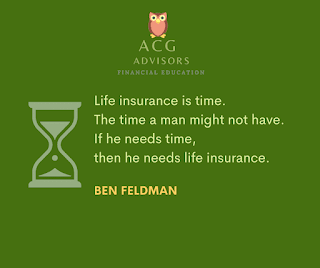
Here are some of my favorite quotes from him, may it inspire you as much as it had inspired me, all the best my friends


Thursday, January 20, 2022

66. Why is it easier to buy an iPhone than a Life Insurance Policy?


The iPhone 12 is one of the fastest selling iPhone model, reported to have sold over 100 million units just seven months from launch, what makes it so desirable?

First is the iPhone gives the buyer instant gratification, never mind if he has to line up for hours in an apple store just to get his unit. in contrast, the gratification provided by a Life Insurance Policy is often delayed to an uncertain time in the future greatly reducing purchase satisfaction

Second, having an iPhone is a social status symbol, among peers and friends, the one using an iPhone is generally seen as someone who can afford (entry models starts at around Php 35K) and maybe by association - maybe more successful ? A Php 35k price tag is already enough to secure a basic life insurance coverage with a decent face amount. But can you imagine bringing your insurance policy to a social gathering and telling anybody who cared to listen you bought one? may not be exactly a good conversation starter he he

One of the key attractions of an iPhone is its extreme usability, most features are intuitive by nature and the user experience can still be enhanced by millions of supplementary apps available in the apps store. To a lot of people, Life Insurance Benefits and what it can do to help financially secure policyowners are often vague and not fully appreciated 

I can still hear some comments that life insurance benefits can only be availed if someone dies, this may not be exactly true now as Life insurance products have already evolved, benefits can include "living" benefits like protection against critical illness, maturity values can be used to supplement retirement funding, programed withdrawals can also be applied to fund the education expenses of a child and so on


One useful tool for financial advisors is to have clear and concise "financial advisory narratives" that would best illustrate and describe the many uses and benefits of a life insurance policy, a narrative is a chronology of related ideas that can help a prospective insurance buyer walk through the stages in appreciating the importance of life insurance in a well crafted financial plan

If a financial advisor can make a life insurance policy as desirable as an iPhone using clear and concise financial advisory narratives, he may then be able to help secure more Filipino families

Next : The four essential financial advisory narratives

stay safe my friends!

Monday, January 17, 2022

65. To qualify for MDRT, bring in 2 clients per week


Most of us have already set targets for ourselves, no doubt a lot would be aiming to qualify for MDRT and beyond, but wishing and believing is not enough, it must be supported by a process that outlines the critical action steps and benchmarks that would tell us if we are on track

The two most important benchmark for tracking is first, the number of clients that we brought in and second, the average case size


The number of clients that we bring in is a function of our activities;  the more number of prospect engagements we have, the more clients we can bring in, this is very straightforward

so wishing and believing will come to naught if it is not supported by the number of sales calls that we do regularly

Average case size is a function of skill; we cannot close a Php 1 Million policy doing a Php 10,000 presentation, To get prospects to entrust to us their millions, we should be able to demonstrate credibly through our advisory conversations the extent of our knowledge and expertise in helping them achieve their financial objectives

Among the two, "number of clients" would be the more rewarding benchmark in the sense that "victories" no matter how small will motivate us to do more, as we do more presentations, we will become better, doing this regularly will raise our skill level

This will lead to progressively bigger case size

To qualify for MDRT, aim to bring in 2 clients per week, doing this consistently will greatly increase our chances of finally qualifying for the MDRT

All the best my friends!

Tuesday, January 4, 2022

64. Number of clients x case size = MDRT


Its the time of the year when financial advisors all over set their targets for the year, whether its the setting of personal or team targets, it helps to focus on two key measures to track progress


A lead is just a "name" that may or may not avail of our services, to convert a lead to a prospect, there has to be some interest in the part of the "lead" to bring the conversation to the next level

Financial advocacy is freely sharing ideas and that may be relevant to somebody aiming for financial security, approaching a lead with insightful ideas on how to maximize the benefits of financial planning without any commitments on his part may create a desire in the "lead" to request for more information, this could pave the way for a follow up meeting which would increase the chance of the lead to turn into a prospect

Contrast this with the typical sales approach when a "lead" is placed in a situation where he has to categorically decide "yes" or "no" to a proposition, a negative response effectively ends the possibility of follow up meetings

Activity is number driven - the more people we talk to, the higher will be the chances of getting prospects. Adapting an advocacy approach minimized call reluctance due to rejections and increase the number of people we talk to


The lead that turned into a prospect and eventually to a client may start with the "minimum" to test out the validity of our ideas, next step would be to build up case size which is function of financial advisory skills

The basic foundation of financial advisory skills is an extensive understanding of the financial planning process, mastery of available products and the ability to match these products to an identified need


To make 2022 your best year ever!

  1. Talk to as many people as you can using your "advocacy narrative"
  2. Continuously enlarge case size using your "financial security narrative"! 
All the best my friends!